Pumpkin & Sunflower Seeds: Small Ingredients, Everyday Possibilities
A practical guide to pumpkin and sunflower seeds for readers aged 14–69: what makes them different, how to use them in familiar meals, and what to check before you buy.
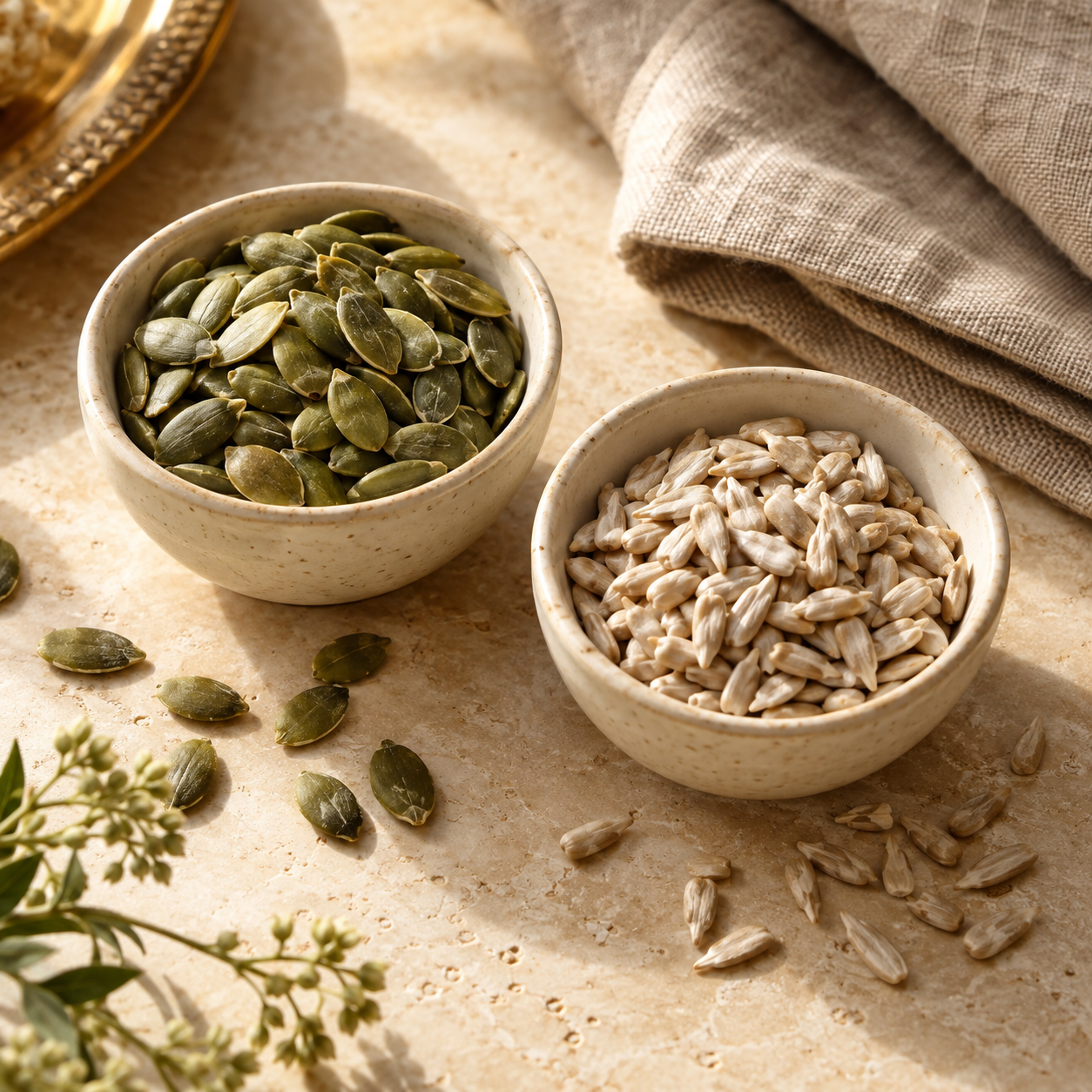
Two seeds, two ways to add interest
A bowl of oats, a quick salad or a homemade loaf can feel different with a scattering of seeds. Pumpkin and sunflower seeds bring texture and a nutty flavour to familiar food, so you can start with a meal you already enjoy.
Hulled pumpkin seeds are the flat green kernels often called pepitas. Their larger size makes them easy to notice in a salad or bread topping. Hulled sunflower kernels are smaller and pale beige; they mix easily through breakfast bowls and homemade seed mixes. These descriptions refer to the edible kernels pictured here. Check your pack for the form supplied and its preparation directions.
There are useful nutritional differences, too. The US National Institutes of Health lists roasted pumpkin seeds among food sources of magnesium. It also identifies sunflower seeds as a food source of vitamin E. Magnesium contributes to normal muscle and nerve function; vitamin E has an antioxidant role in the body. These are functions of nutrients within an overall diet, rather than promises of a particular health result from a spoonful of seeds.
The amounts in a food can vary with preparation and serving size. For the product you buy, use its own nutrition and ingredient label. A general food table does not establish the nutrient content of a particular Diwalibaa pack. Choose the seed you enjoy cooking with, or use both for a mix of textures.
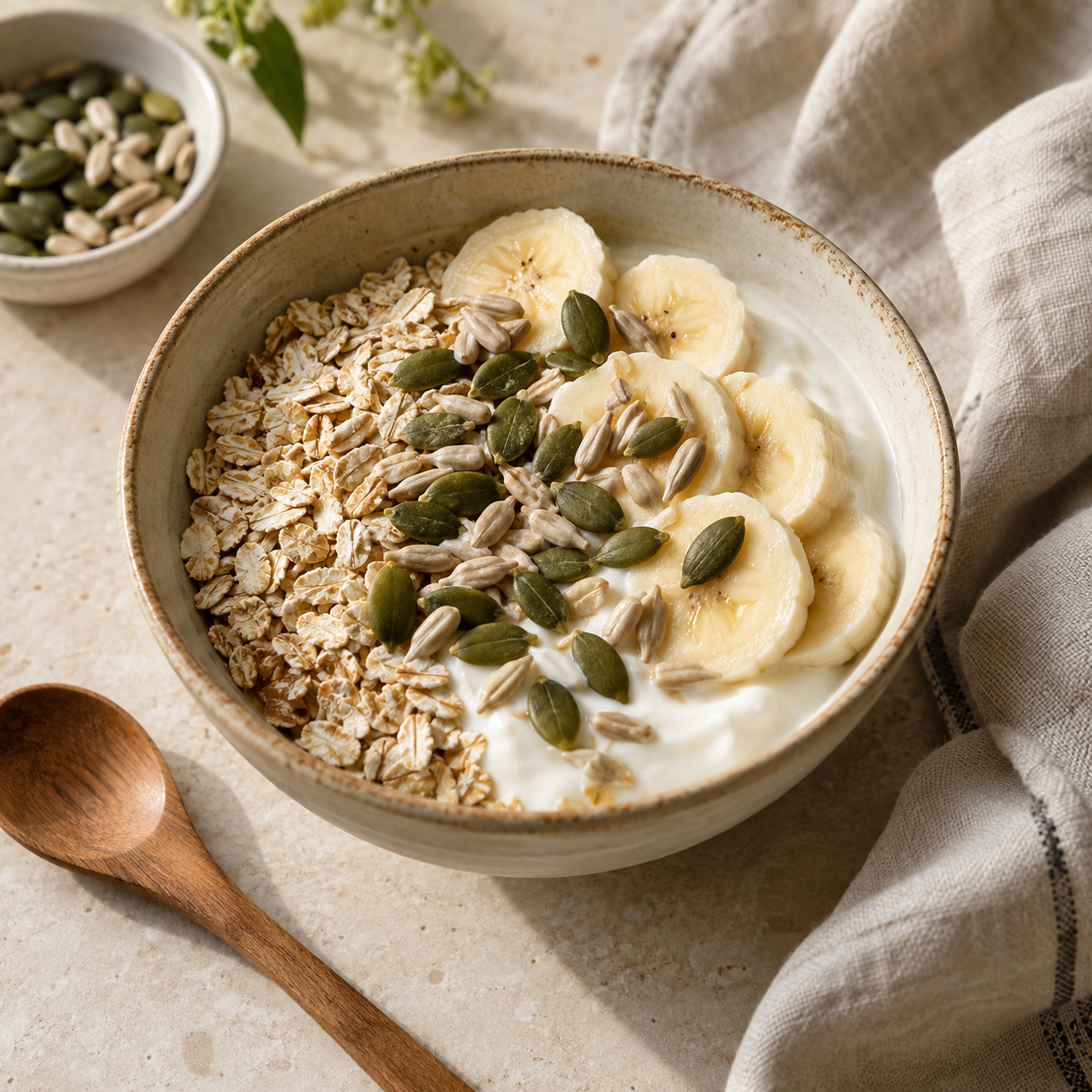
Start with the meal already on your table
Breakfast is an easy place to experiment. Spoon plain yogurt into a bowl, add oats prepared according to their packet directions and some sliced banana, then finish with a light scattering of pumpkin and sunflower kernels. For a warm option, add the seeds to cooked porridge just before serving. The yogurt bowl shown here is serving inspiration; swap ingredients to suit your preferences and any allergies.
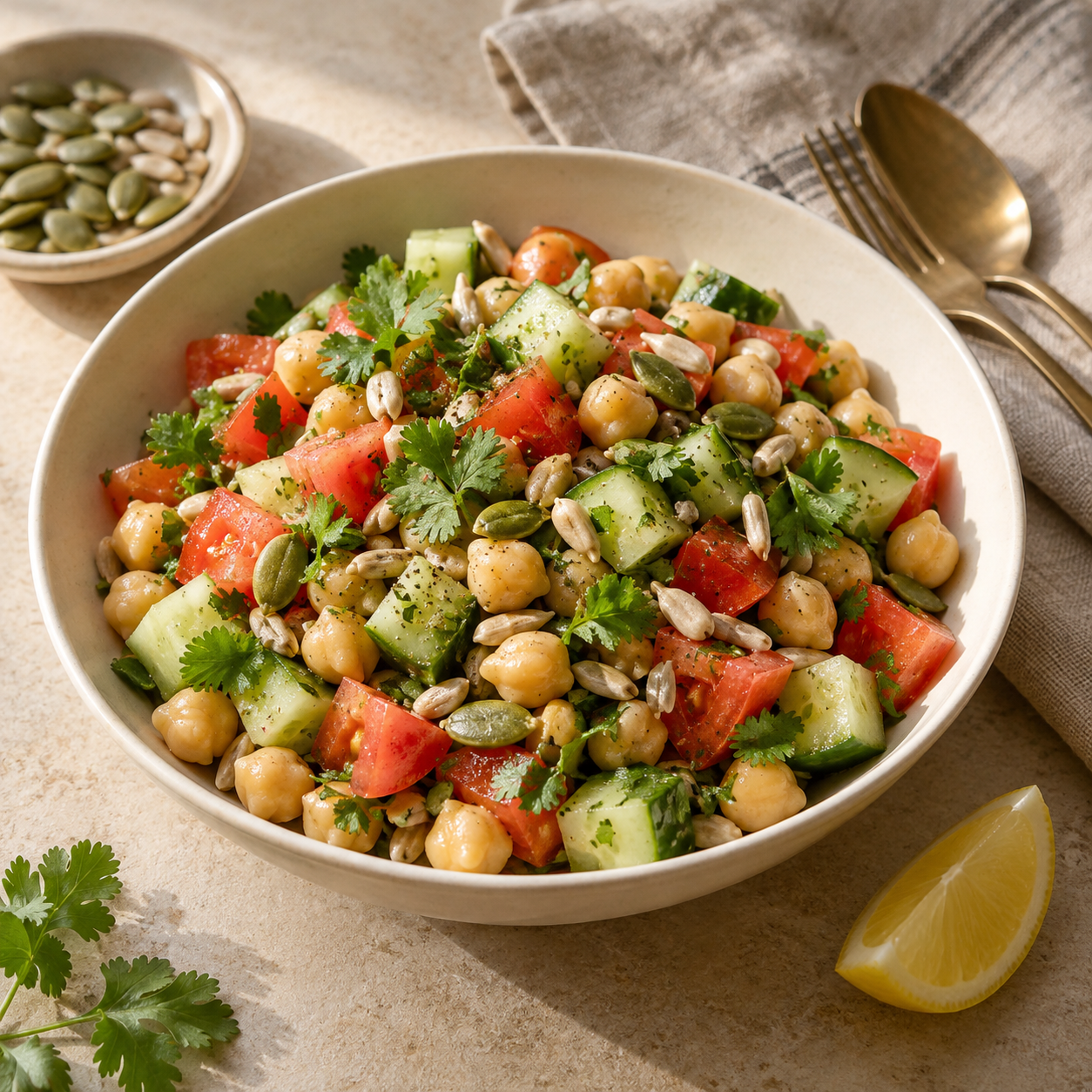
At lunch, try cooked chickpeas with chopped cucumber, tomato, coriander and lemon. Add the seeds near serving time so their texture remains noticeable. You could also scatter them over a finished vegetable soup or use a little in a sandwich filling. Keep the rest of the meal varied: the NHS Eatwell Guide describes a balanced pattern built from different food groups across the day or week.
For baking, use a recipe designed for seeds rather than replacing large amounts of flour by guesswork. Pumpkin kernels make a visible bread topping, while smaller sunflower kernels can be mixed through crackers. Follow the recipe and the seed pack's instructions for preparation and cooking.
A teaspoon or two as a topping is a simple kitchen experiment, not a prescribed daily intake. Adjust the amount to the recipe and your appetite. You do not need a special timetable or an elaborate routine to enjoy either seed: choose one meal, try a small addition, and see which flavour and texture you prefer.
Choose thoughtfully. Store with care.
This guide is written for readers aged 14–69, but that span includes very different appetites and routines. A teenager taking lunch to school, an adult preparing meals for work and someone cooking for a quieter day do not all need the same serving. The meal ideas here are flexible starting points, not an age-by-age nutrition prescription.
For teenagers, keep seeds as one ingredient in regular, varied meals. Adults can use the same ideas at breakfast or lunch, with quantities that fit the rest of the meal. Older readers can choose dishes and textures they find comfortable. Anyone with special dietary or medical needs should ask a registered dietitian how to adapt their food choices; the NHS makes the same qualification for its general healthy-eating guidance.
Read the ingredient and allergen information before trying a new pack or recipe. The NHS notes that a person can be allergic to any food. A seed is not automatically suitable simply because you tolerate a different seed or nut. If you suspect a food allergy, seek medical advice and avoid experimenting with the suspected food on your own.
For everyday storage, follow the pack's directions and best-before date. Our current pumpkin and sunflower seed listings advise keeping the product sealed in a cool, dry place away from direct sunlight. Prepared yogurt bowls and salads also need the storage care appropriate to their other ingredients; the shelf life of a dry seed pack does not apply to a mixed dish.
Ready to try them? Browse the current Diwalibaa Organics listings for pack options and prices, then start with one meal you already make. A useful pantry ingredient earns its place through flavour, convenience and the ways you enjoy using it.
Browse our pantry collection