Rosemary Oil for Hair: How to Make It, Use It and Understand the Benefits
Learn how dried rosemary becomes an infused hair oil, how it differs from essential oil, what hair-growth research actually shows, and how to approach preparation and use with care.
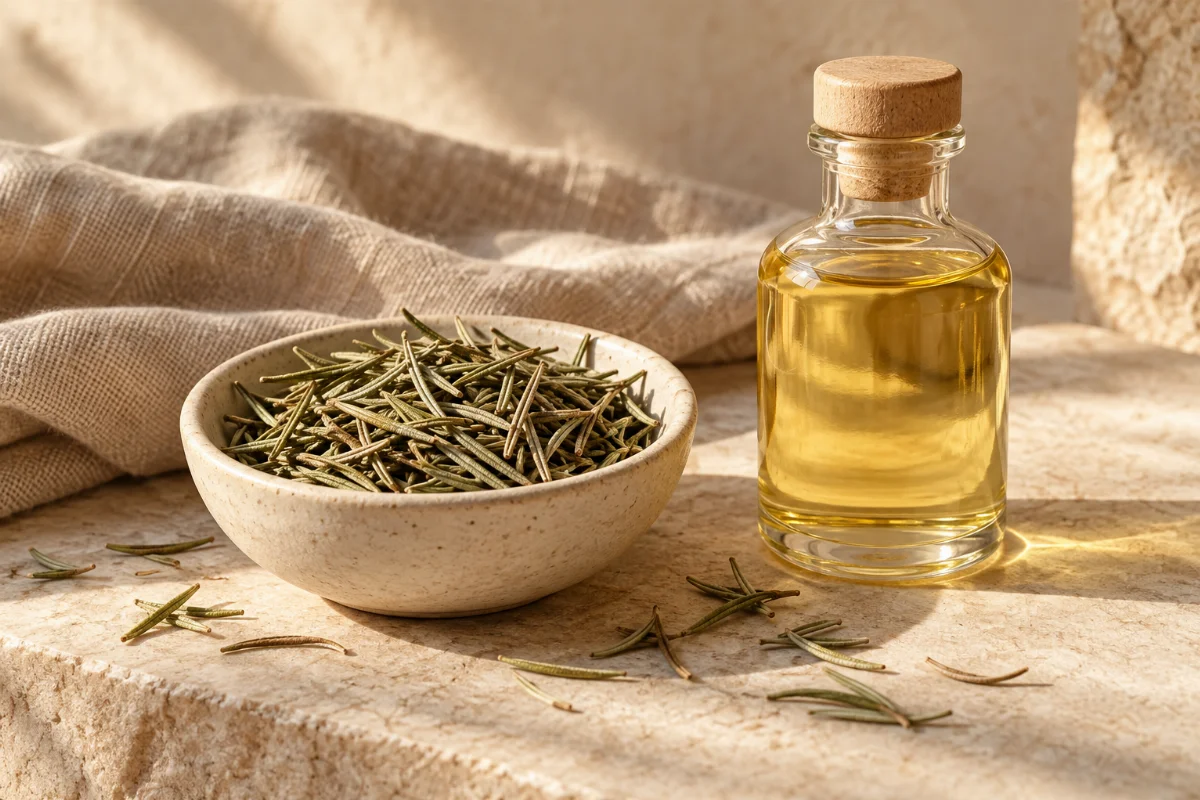
Two different oils, two different expectations
Before trying a rosemary hair routine, identify what you have. Rosemary-infused oil is made by steeping the leaves in a carrier oil. Rosemary essential oil is a concentrated aromatic extract; the European Medicines Agency describes it as obtained by steam distillation of the plant's above-ground parts. Soaking leaves in coconut or olive oil does not make essential oil, and boiling leaves in water makes a water preparation, not an oil.
The Diwalibaa Organics combo contains 100g of dried rosemary leaves and a hair applicator bottle with a 100ml capacity. It does not contain 100ml of ready-made rosemary oil. Read the pack directions before preparation; the applicator's capacity is not a recipe ratio or a recommended application amount.
What benefits are realistic? An infused oil offers a way to include rosemary in an oil-based grooming routine, with an herbal scent that will vary between batches. Any immediate softer or oil-coated feel should not be confused with new hair growth. A homemade infusion has no standardised rosemary concentration.
For hair growth, a 2015 randomized trial assigned 100 people with androgenetic alopecia to rosemary oil or 2% minoxidil for six months. Neither group had a significant hair-count increase at three months; both did at six months, without a statistically significant difference between groups. Itching increased in both groups. The study did not find a significant improvement in dandruff.
This is a research signal, not proof that every rosemary preparation works equally well. The comparison did not include a placebo group or 5% minoxidil, and it did not test this leaf pack or the homemade infusion below. It cannot establish that rosemary reverses every type of hair loss. Keep prescribed treatment in place and discuss persistent shedding with a dermatologist.
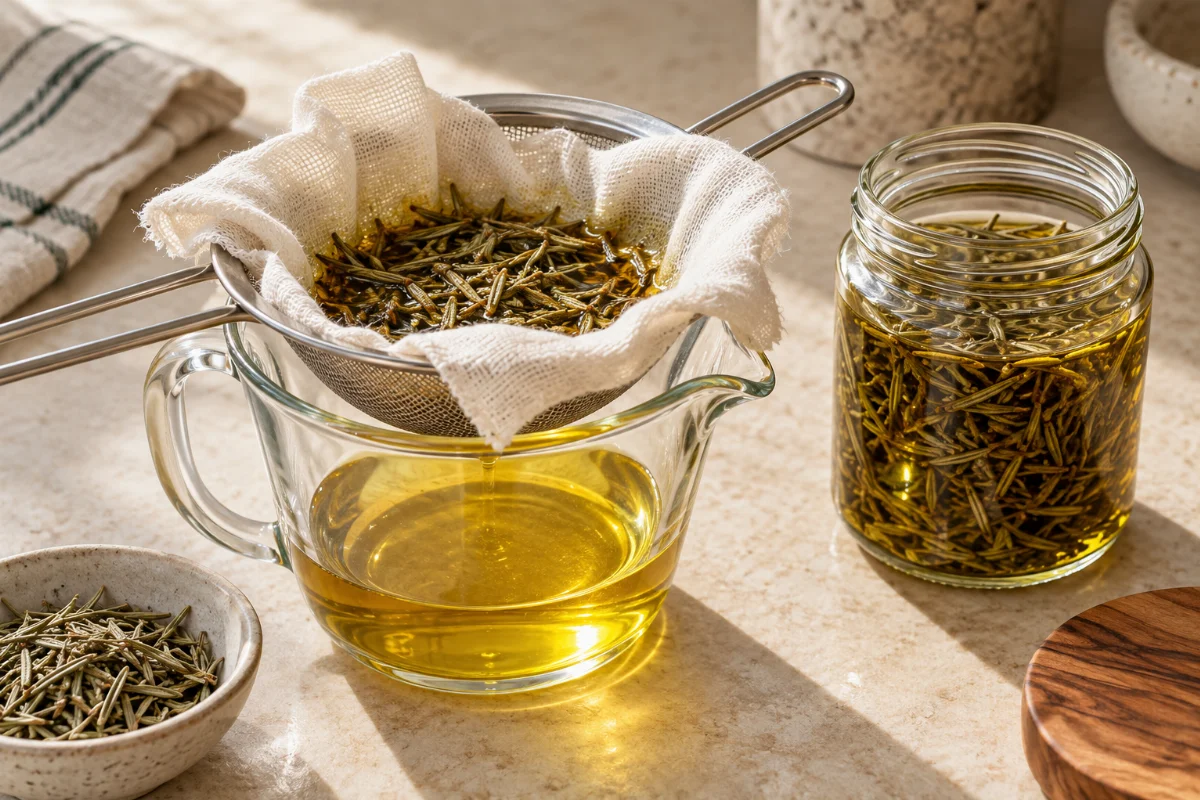
A simple no-heat preparation method
This is a general adult cosmetic preparation adapted from the Herbal Academy's dried-herb infusion method, not a tested hair-growth formula or a substitute for the product's pack instructions. Read the use and age guidance below before making a batch.
1. Prepare a small sterilised glass jar, lid, spoon and straining cloth; let everything dry completely. Use fully dried rosemary and a plain carrier oil suitable for your skin, such as olive oil.
2. Loosely half-fill the jar with dried leaves. Add enough oil to cover them by about 2.5cm, leaving room to close the jar. Stir with the dry spoon to wet the leaves and release trapped air.
3. Close, label with ingredients and date, and keep in a dark cupboard at room temperature for 4-6 weeks. Gently roll the jar every few days, keeping the leaves submerged. Do not add water, fresh leaves or rosemary tea.
4. Strain through the dry cloth into a clean, completely dry bottle. Remove the leaves, close and label it. Keep away from heat and light.
Make a small batch. This home preparation has no validated expiry date; a normal smell does not prove safety. Discard it if moisture, mould, an unusual smell or other deterioration appears. Do not use this hair-care preparation for cooking.
There is no need to add concentrated essential oil to this recipe. Adding extra drops changes the formulation and introduces a separate dilution question. If you want a ready-to-use rosemary scalp product instead, choose one with clear ingredients, age suitability and application directions. A stronger smell is not a measure of better results.
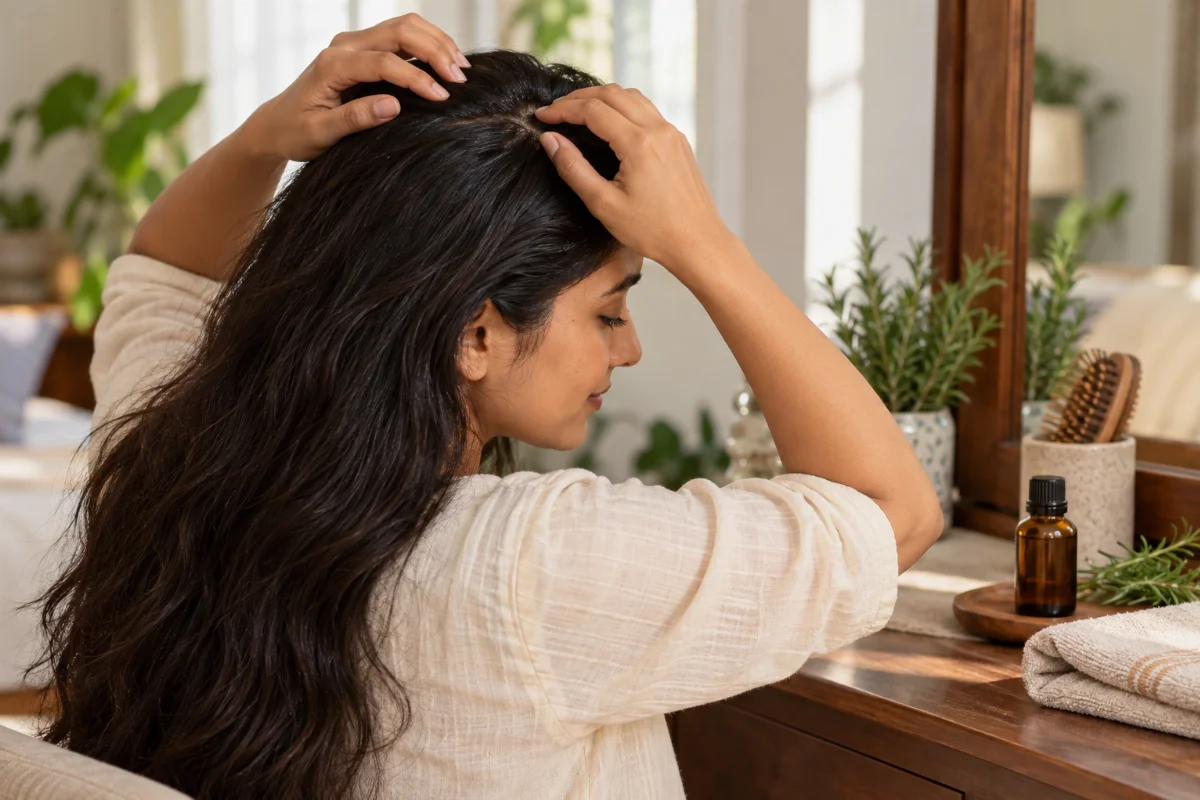
How to apply it, and when to skip it
Start with a skin check. The American Academy of Dermatology recommends trying a new skin-care product on a small area, such as the inner arm, twice daily for 7-10 days before wider use. Keep it on for the intended contact time. Test the finished mixture, not just its ingredients; this does not guarantee that the scalp will tolerate it. Wash it off and stop if itching, redness or swelling develops.
For adults aged 18-60 who tolerate the finished infusion: part the hair, place a few drops on clean fingertips and spread a thin film over a small area of intact scalp. Use gentle fingertip movements rather than scratching with nails. Start with less oil; soaking the scalp or filling the applicator is unnecessary. These are cautious cosmetic suggestions, not a clinically tested dose.
If you use the applicator, transfer only fully strained, room-temperature oil and avoid touching its tip to irritated skin. Clean and dry the bottle according to its care instructions before refilling. Wash your hands afterwards and keep oil away from the eyes, face and broken skin.
How long and how often? Research does not establish a contact time or schedule for this homemade infusion. For an initial use, keep it to a brief pre-wash application and shampoo it out; do not begin with an overnight treatment. If you want a precise leave-on time or frequency, use a labelled cosmetic product and follow its instructions. Stop immediately if it stings or irritates, rather than waiting for a planned wash time.
For readers aged 14-17: this guide is educational, not a recommendation to start a DIY scalp treatment. Involve a parent or guardian and a clinician before use. EMA guidance advises against rosemary-oil herbal medicines under 18; that restriction concerns medicinal essential-oil preparations and does not establish the safety of a homemade leaf infusion. Ask a clinician first during pregnancy or breastfeeding, or if you have a scalp condition or use scalp medicines.
Never apply undiluted essential oil to the scalp, and do not swallow essential oil or this hair-care infusion. Keep bottles away from children. If a reaction is severe or persists after washing the product off, seek medical care. Sudden, patchy or painful hair loss needs assessment rather than a stronger oil recipe. The most useful routine is one your scalp tolerates and that does not delay appropriate care.